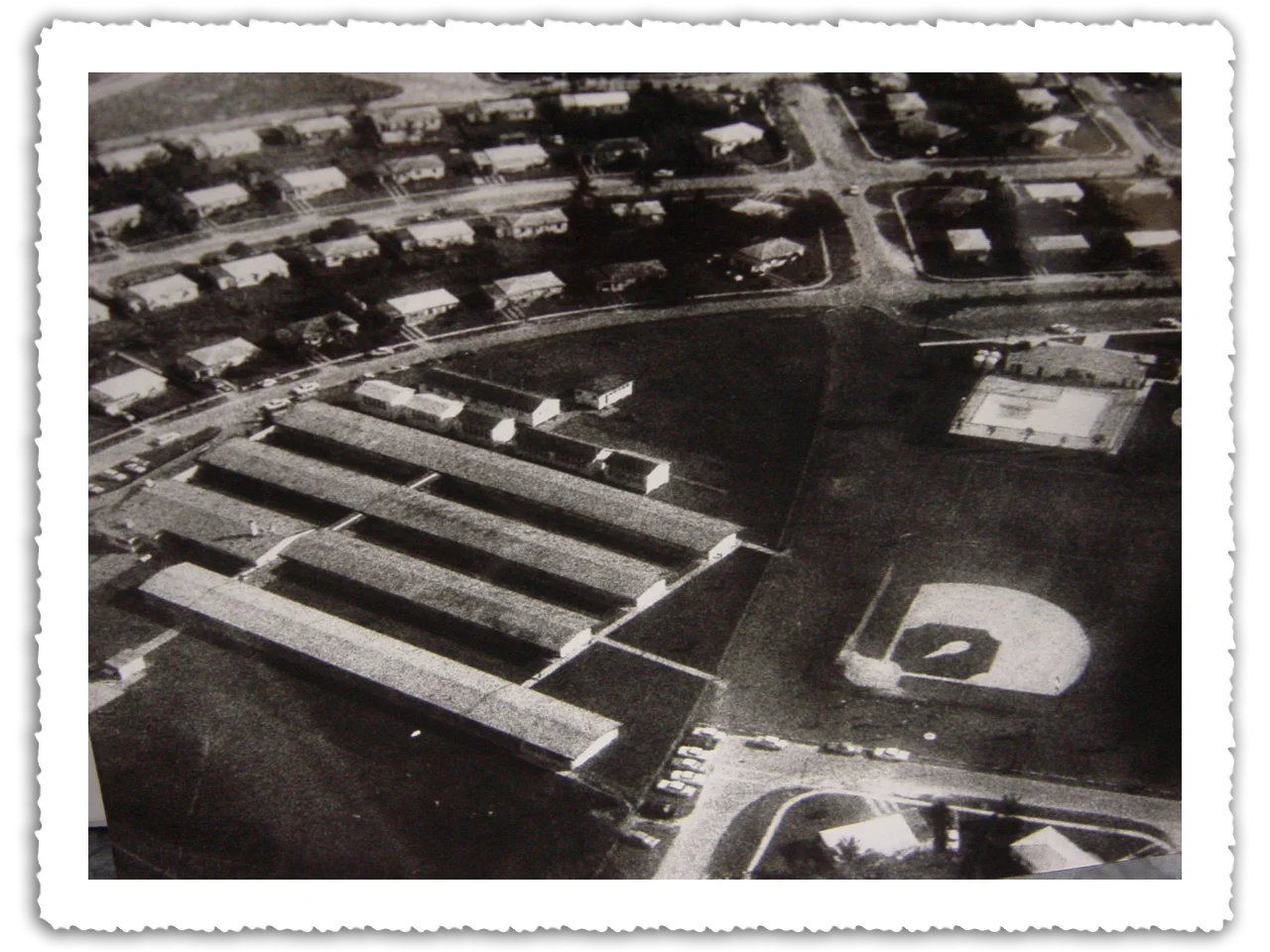
Prior to the 1960’s Civil Rights Movement, decent affordable housing for African American professionals in South Florida was difficult to find. Difficult, but certainly not impossible, thanks to Captain Frank C. Martin, the community’s visionary and developer, who in the late 1940s purchased farmland in rural southwest Dade County and plowed under the prejudice of the times to cultivate Richmond Heights, a new community for returning African American veterans.
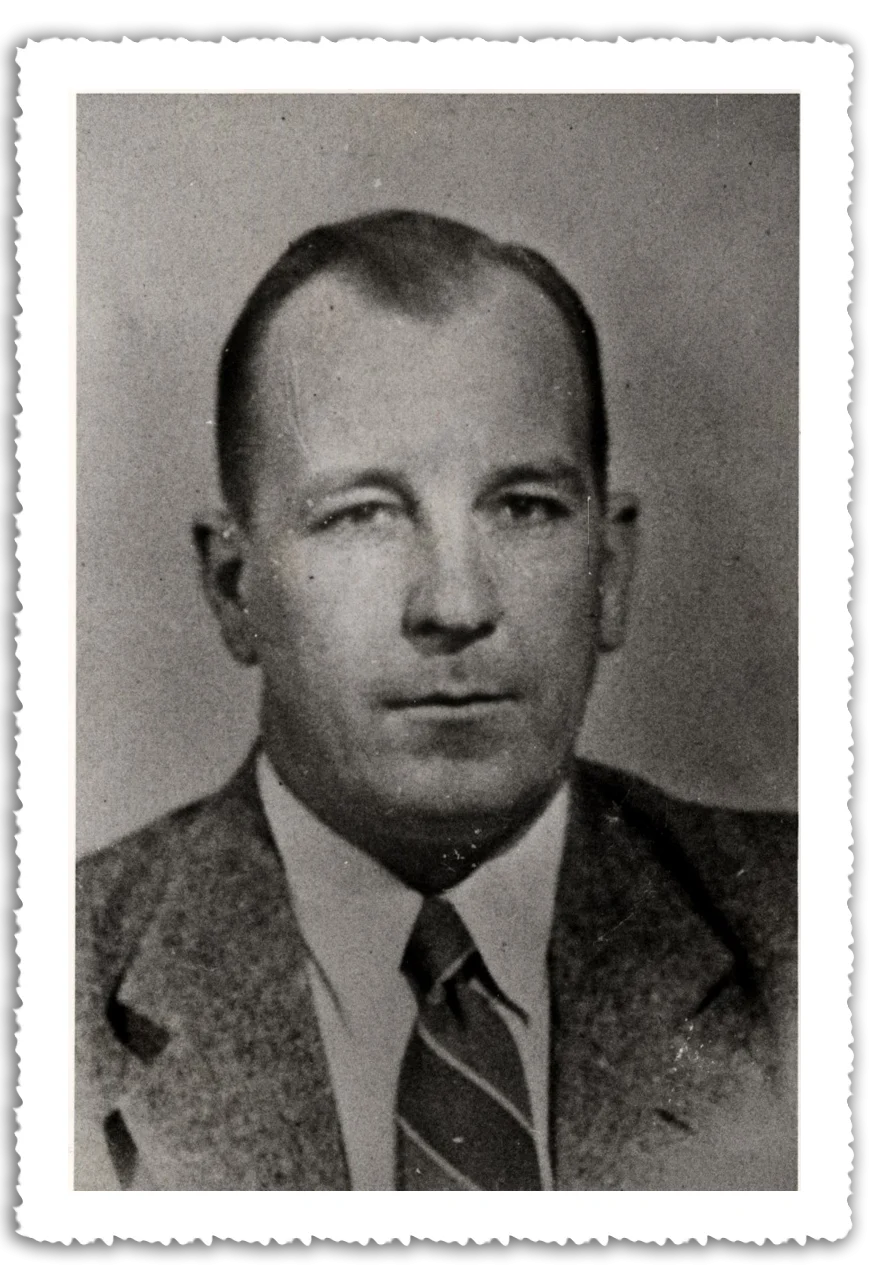
Martin, a white Pan Am pilot, served with black soldiers in World War II and had gained great admiration and respect for their fighting spirit and ability to overcome many obstacles created by both war and prejudice.
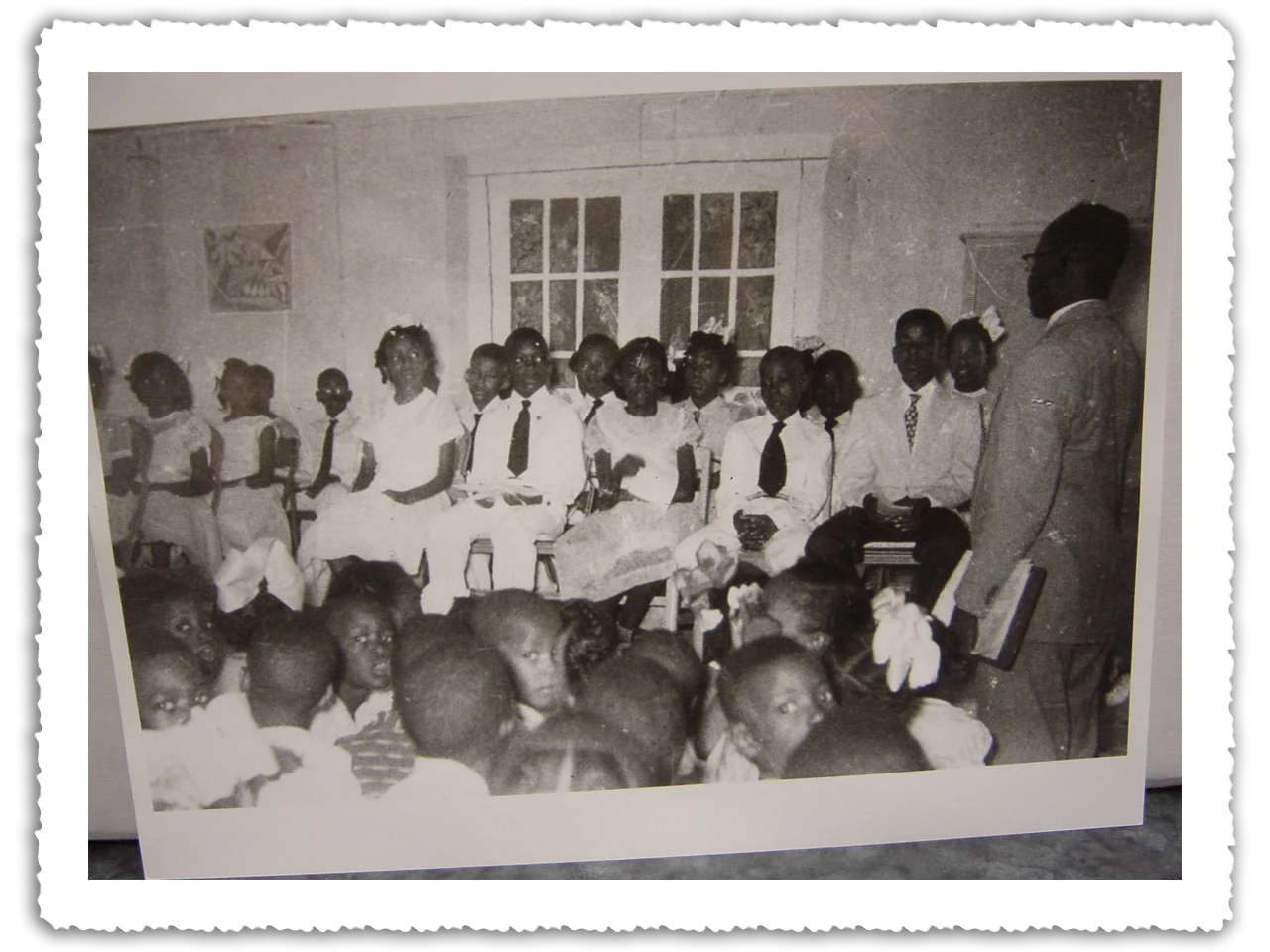
Martin soon formed Richmond Development, Inc. and sought the help of a local advisory committee of African Americans to build his community. The committee included Canon Theodore Gibson, Rector of Christ Episcopal Church in Coconut Grove, who was to become the leader of Miami’s Civil Rights Movement, David A. Douglas, manager of the Atlanta Life Insurance Company and others such as Rev. Graham, Attorney G.E. Graves, and Mr. William Perry.
Richmond Heights became a standard bearer and a challenge to other area developers to provide well-built homes without skimping on land, materials, and labor. As for Martin, he made his home available to residents for weekend social activities, where the subject often turned to his dream of building a community theater and expanding the community across 152nd Street, where lakes would be dug.
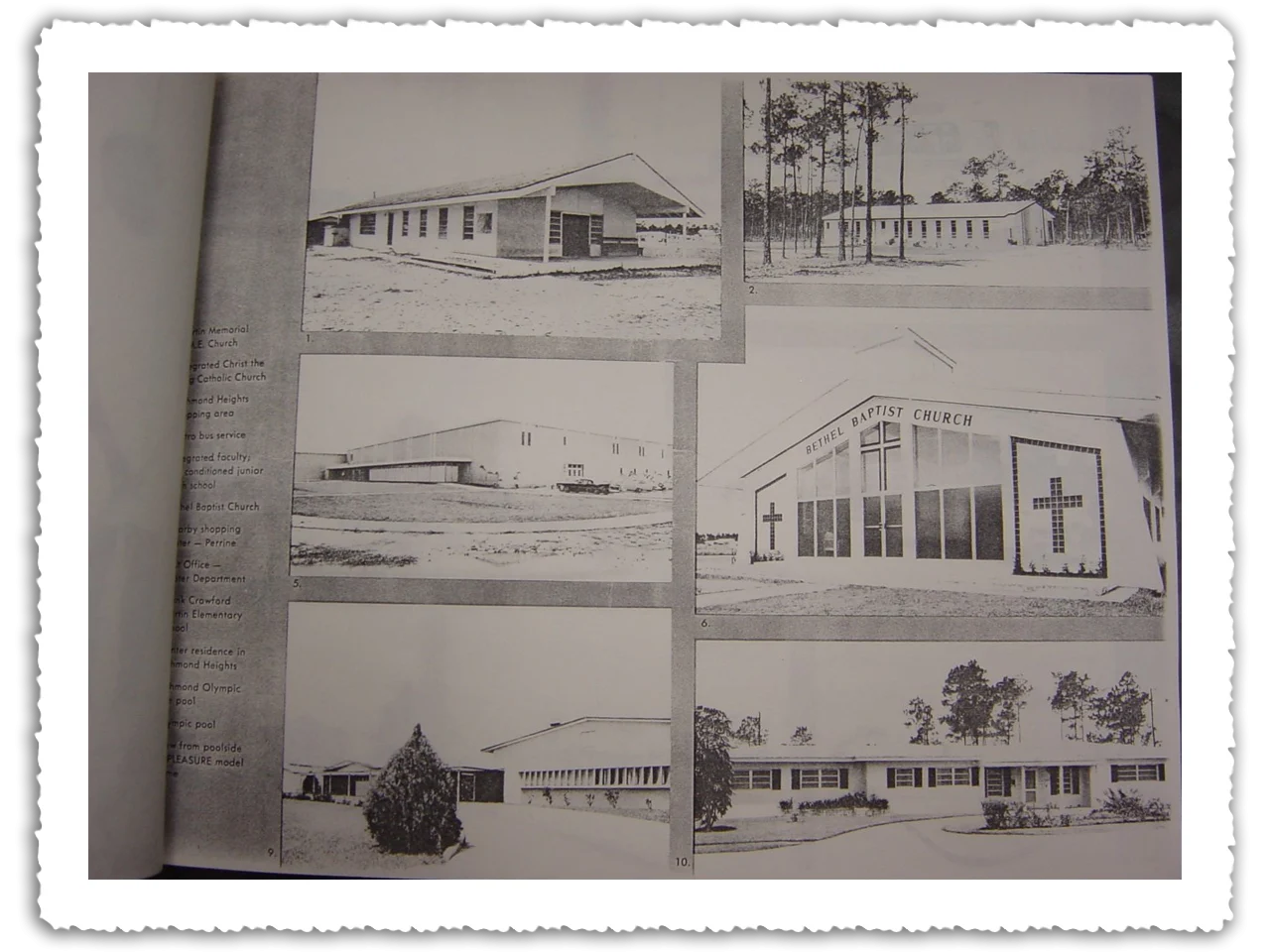
Martin donated land for parks, two churches (Bethel Baptist & Martin Memorial A.M.E.) and the elementary school, which today bears his name. Of the original 3,000 acres he purchased in 1949, the Federal Government took 800 to build the Richmond Blimp Base, which today is the site of Metrozoo.
By May of 1951, Martin’s Richmond Heights claimed 457 homes. Tragically, he never saw the conclusion of his dream community when, on a trip near Lake Placid in Central Florida, Martin was killed in a collision with a truck. Shocked at the loss of the 42-year-old community leader, construction stalled until 1952, when Hialeah builder E.J. Pollock, a good friend and believer in Martin’s plan, purchased the remaining acreage and began building.
Today, Richmond Heights is home to some 9,000 residents. Second, third, fourth, and fifth generation descendants of the original community pioneers are ensuring the legacy of the historic neighborhood by continuing to move forward with a respect for heritage and an eye on the future.
Editor’s Note: This story of Richmond Heights origins was gleaned from interviews with Frank Carroll Martin, son of the founder of Richmond Heights, and from newspaper articles dated May 20, 1951, from The Miami Herald and The Miami Times.
In 1951, newspaper reporters referred to Richmond Heights as one of the most unusual African American subdivisions in Florida, if not the whole country. From the first scraper of a bulldozer, there was a waiting list of black WWII veterans wanting to buy in the planned community of wide curving streets, concrete sidewalks, and modern homes.
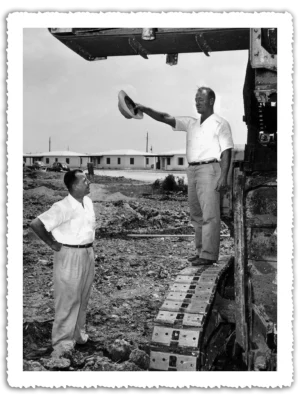
The man behind the development was Captain Frank Crawford Martin, a former Pan American Airways pilot who spotted the track of pineland after having flown over Dade County for several years. First, he planted his 2,200 acres with papaya crops. When the 1945 hurricane destroyed his grove, he plowed it under and looked for other uses for the land, purported to be the highest elevation in the county.
As Airport Manager for Pan Am at Miami Airport, Captain Martin spoke with African American skycaps and airport workers, many of whom had recently returned from the War and who were in need of housing from their growing families. He sought the advice of a realtor and several acquaintances. The idea of a planned community for black GIs was proposed and eventually accepted. Martin undertook the development after consultation with a committee of African American leaders.
There were no neighbors to fight the proposed development in the remote vicinity of Richmond. Capt. Martin added ‘Heights’ to the name because of the area’s high elevation. At first, lending institutions were wary of venturing out in “the woods” to finance construction. According to Capt. Martin in this 1951 interview, Investors thought we were off our trolley to go that far out in the country to develop a subdivision for Negroes. We managed to get up three model homes and when the Negroes came and saw them, we got orders so fast that investors changed their minds.”
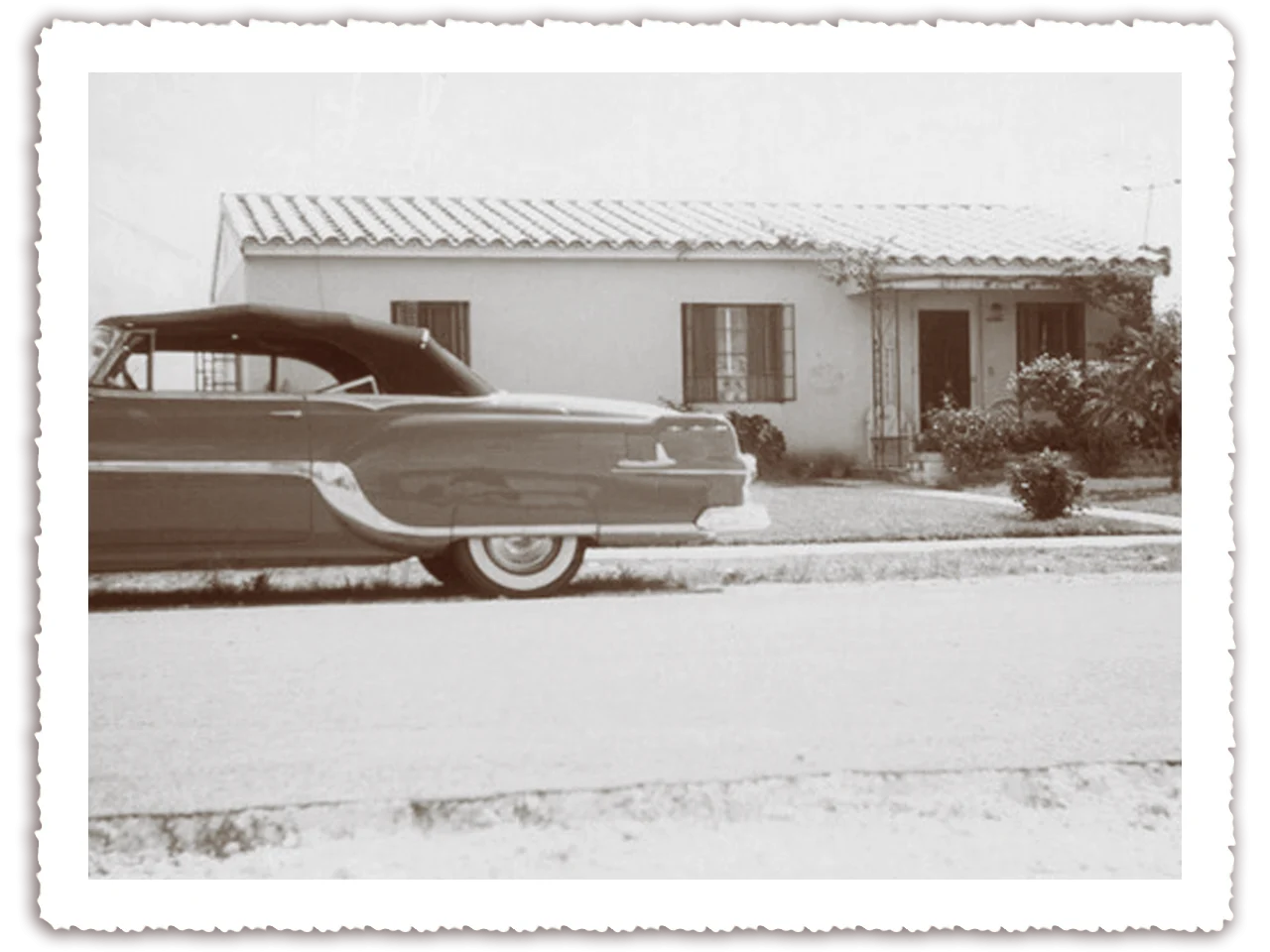
Only veterans with honorable service in some branch of the Armed Forces could buy a home in Richmond Heights. Under the VA home finance plan, a veteran could buy a house for a down payment as little as $25. The base price was $8,030. Most of the houses were three bedrooms with carports. The interiors were the same, but no two houses in any one block had the same exterior. Lawns were spot planted with St. Augustine grass before occupancy. Minimum lot size was 75’ x 100’.
Martin planned the community with provisions for schools, parks, churches, and a shopping center. He did not want children to walk across any busy streets to get to school and parks. He even donated land for Frank C. Martin Elementary (now K-8 Center), Sgt. Joseph Delancy Park and two churches, Martin Memorial AME and Bethel Full Gospel Baptist.
Richmond Heights had its own water system, post office and fire hydrants within 500 feet of every building. A university planning department designed wide streets with gentle curves, eliminating the stodgy and uninteresting square patterns of mass housing projects of the era. Curving streets were intended to cut down on speeding cars. The development was served by the Richmond Coach Company, which operated buses to downtown Miami. Martin insisted that the segment from Richmond Heights to South Miami had no seating restrictions for passengers.
Martin saw Richmond Heights as more than an African American housing development. He saw it as an opportunity for homebuyers to show-case their homeownership status, and as a challenge to developers in Miami and elsewhere throughout the South to provide well-built houses without skimping on land, materials or labor. He had witnessed the “get in and get out” tactics of other developers and he intended that Richmond Heights would be a “get in and stay in” development.
The signs of permanency were abundant in the community. Every weekend the neighborhood was alive with families working on their lawns and beautifying their homes. Carports opening on the streets were spic and span. Leading women in the community started the Richmond Heights Garden Club, which held an annual flower show where residents would compete for the best lawn, plants, and flowers.
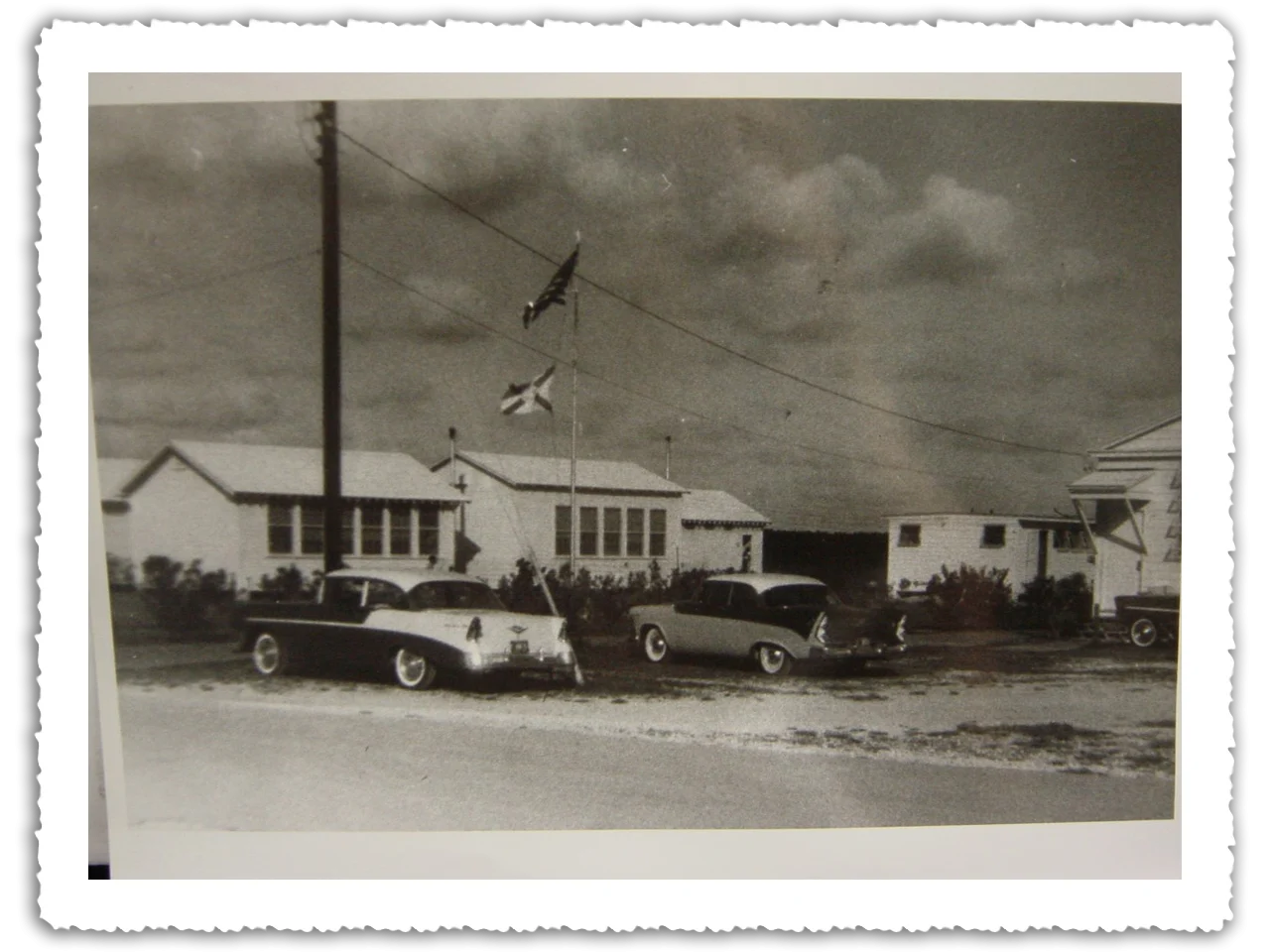
Martin described residents of Richmond Heights as African American families of above average income – school teachers, professional people, those with steady jobs. Practically all of them came from the Central Miami or Coconut Grove districts. “These people are proving that given a chance to buy a medium priced home, they can do it and will take great pride in making it a real home,” he said.
However, there were some occasional unforeseen problems after the buyers were in their houses. Unscrupulous door-to-door salesmen, selling everything from expensive Bibles to furniture, tried to lure residents into inflated payment contracts. There were a few defaults and threats of home seizures. The homeowners approached Martin for help. He spoke sternly to the salesmen and was considering asking the county for assistance in keeping the canvassers out of Richmond Heights. Martin wanted no obstacles to impede his unique model of African American homeownership.
Martin was a publicity-shy, no-nonsense man. “Now that we’ve done what we set out to do in the first phase of the development, the construction and sale of 475 homes, we thought it was time to have the true story of Richmond Heights told. There’s been considerable speculation, gossip, and rumor about this place, hardly any of it on the beam. The fact is, I owned a lot of lands, wanted to do something to develop it and make some money on my investment.” Martin earned little money from the sale of the homes. His real goal was to profit from the next step in the development of Richmond Heights – the construction of duplexes and commercial shopping centers. However, that plan was never realized. Martin will always be known for leading the way in creating modern homes in an attractive setting for generations of African American families in south Miami-Dade County.
Postscript: Tragically, Martin did not live long enough to see his dream completed for Richmond Heights. In 1951, just months after this interview, he was killed at age 44 in a car accident in central Florida. His wife eventually sold the business and construction resumed several years later.
Richmond Heights would become the first private development in Miami-Dade County established exclusively for Black African American World War II veterans and is among the first planned Black African American communities in the nation. U.S. Coast Guard Chief Petty Officer Luther H. Wallace and his wife, Mary, were the first to purchase a home in the newly developed neighborhood. However, George and Betty Swain were the first family to move in, as Wallace remained on active military duty at the time.
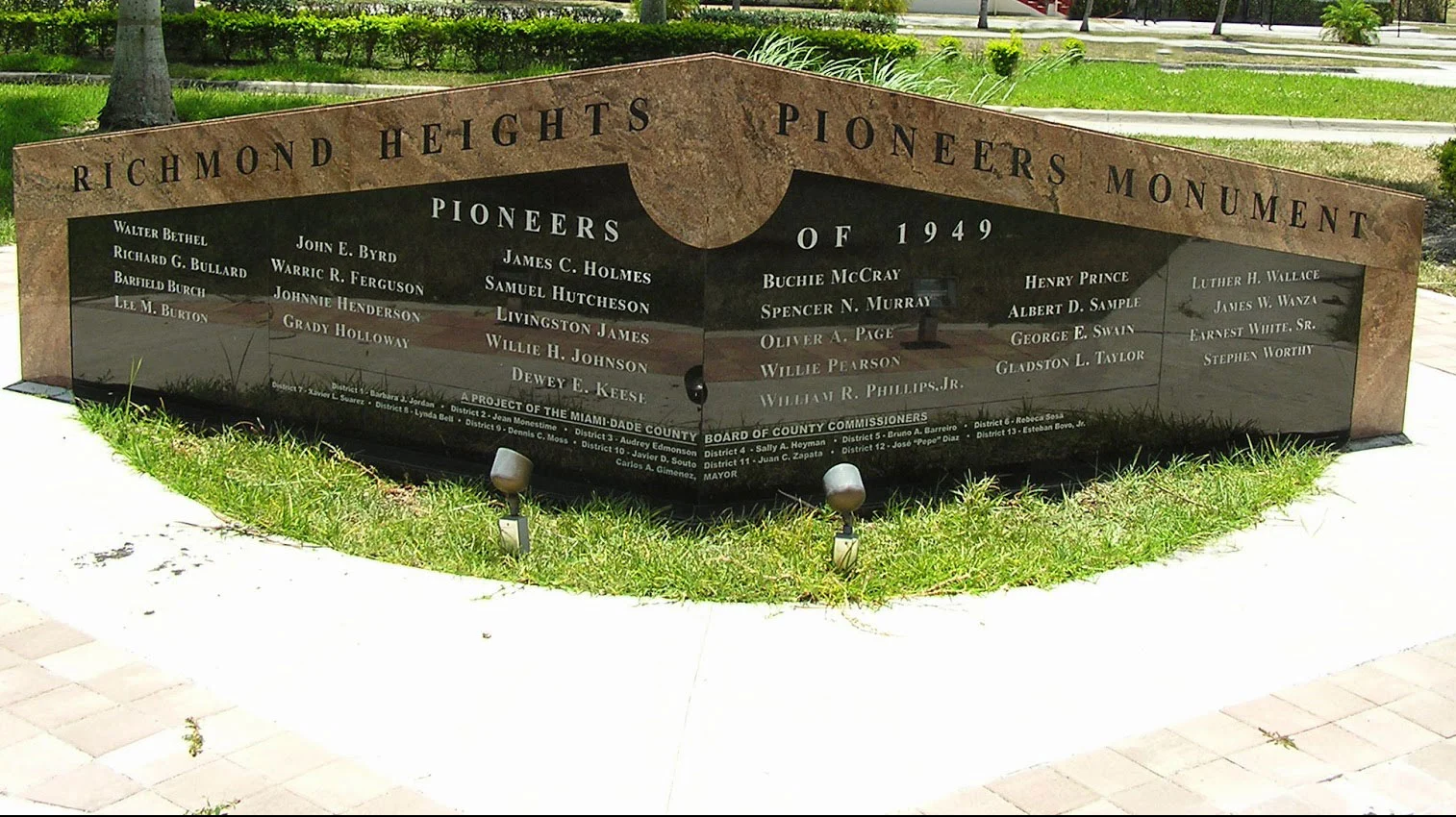
The 26 pioneer veterans who purchased homes in Richmond Heights in 1949 were: Walter Bethel; Richard G. Bullard; Barfield Burch; Lee M. Burton; John E. Byrd; Warric R. Ferguson; Johnnie Henderson; Grady Holloway; James C. Holmes; Samuel E. Hutcheson; Livingston James; Willie H. Johnson; Dewey E. Keese; Buchie McCray; Spencer N. Murray; Oliver A. Page; Willie L. Pearson; William R. Phillips, Jr.; Henry Prince; Albert D. Sample; George E. Swain; Gladston L. Taylor; Luther H. Wallace; James W. Wanza; Earnest White, Sr.; and Stephen Worthy.
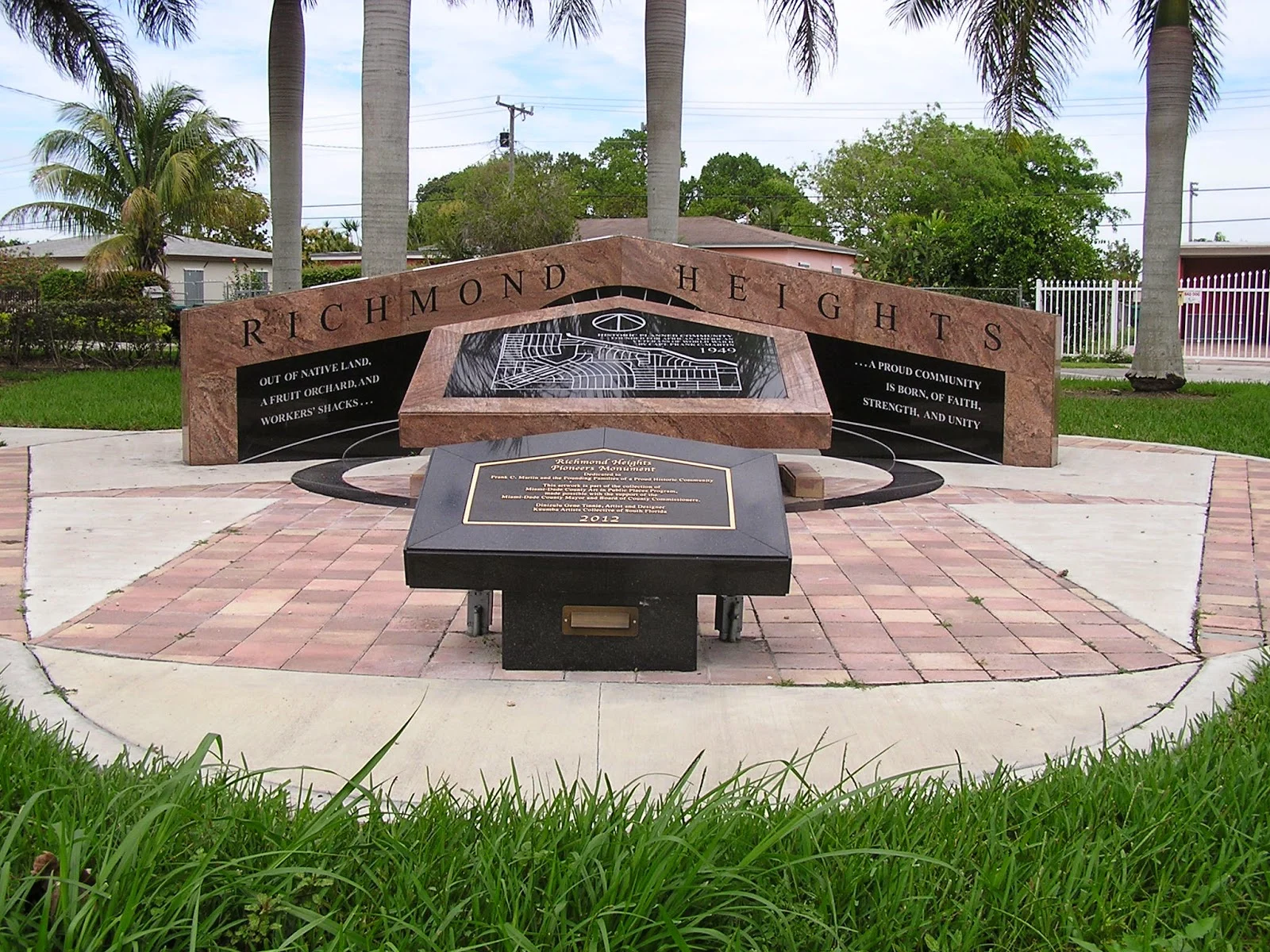
In honor of the 26 founding families, the Richmond Heights Pioneers Monument was dedicated on May 26, 2014, at Lincoln Boulevard and Madison Street. The monument was designed by Dinizulu Gene Tinnie of the Kuumba Artists Collective of South Florida.
Preservation efforts began in 2015 when Lynette Wallace initiated the request for historic designation through the Miami-Dade Historic Preservation Office. Following extensive research and evaluation, the Miami-Dade Historic Preservation Board approved the designation of the Richmond Heights Historic District on July 20, 2016 (Resolution No. 2016-08). The district is located on Monroe Street, bounded by Carver Drive to the north and mid-block between Graham Drive and SW 152 Street to the south.
This historic designation preserves Richmond Heights’ cultural heritage for future generations, establishes a framework for thoughtful development, encourages sustainable and green building practices, and promotes economic growth through heritage tourism.
Let's build our future together
Get in touch and discover how we can make it happen.